A website is part of the sales conversation.
A visitor should quickly understand the brand, the opportunity, the location, the proof and the next action. That means the structure matters just as much as the visuals.
I build custom-looking WordPress websites that help businesses present projects clearly, build trust and create a smoother path to enquiries.
I combine WordPress development, front-end implementation, performance work, basic on-page SEO and a growth mindset. The goal is not to make a pretty page and stop there.
A visitor should quickly understand the brand, the opportunity, the location, the proof and the next action. That means the structure matters just as much as the visuals.
Premium typography, proof, clear information and consistent presentation make the business easier to take seriously.
Project positioning and enquiry paths should be easy to scan.
Calls, WhatsApp, forms and focused CTAs should appear where intent is strongest, not only at the bottom.
Custom-looking websites with a practical WordPress setup behind them. Clean front-end work, responsive layouts and features that are easy to maintain.
No unnecessary stack for the sake of sounding technical. I choose the simplest structure that solves the actual website, search or lead-generation problem.
Custom sections, flexible page structures and a branded front end instead of a forced theme look.
Landing pages and conversion paths connecting interest to a call, WhatsApp or enquiry.
Titles, headings, URLs, internal linking and page intent built around relevant searches.
Lighter assets, responsive layouts and restrained interactions to keep the experience fast.
Updates, content changes, fixes, new pages and iterative improvements after launch.
My earlier work gives the technical foundation.
Editorial layouts, strong hierarchy, search-friendly foundations and clear conversion routes — without relying on a pre-made agency template.
Personal portfolio foundation built with HTML, CSS and JavaScript.
View existing work ↗Store experience with product browsing, cart and checkout-focused UX.
Discuss a rebuild ↗Dynamic content platform using PHP & MySQL as part of the existing portfolio foundation.
Ask for case-study details ↗Business, offer, market, audience, existing website and the real conversion goal.
Pages, sections, content hierarchy, search intent and calls to action.
Clean HTML/CSS/JS or WordPress implementation with responsive behaviour.
Speed, mobile usability, accessibility, on-page SEO basics and visual polish.
New landing pages, content updates and lead-focused improvements.
Basic on-page SEO belongs inside the page structure from the start instead of being added as an afterthought.
Especially on mobile, a cleaner page and lighter assets can reduce friction between discovery and enquiry.
A useful website helps people understand the offer, find the information they need and take the next step with confidence. These are the practical decisions behind the build.
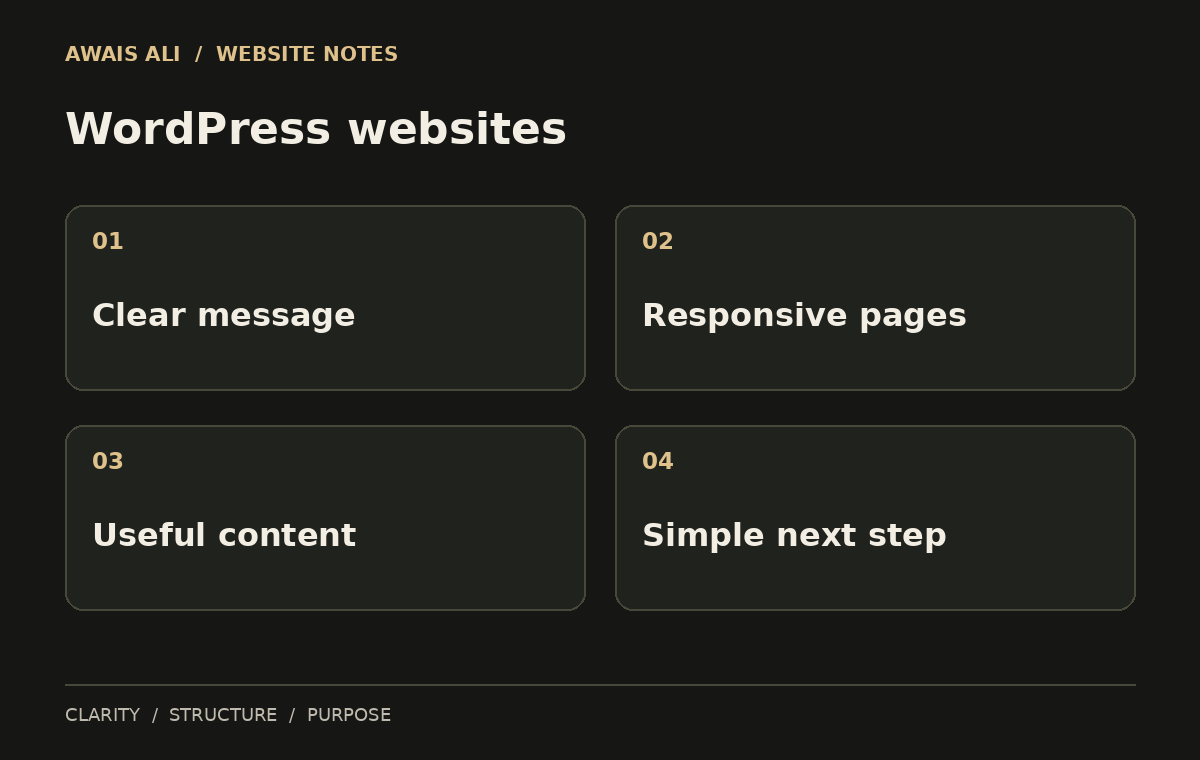
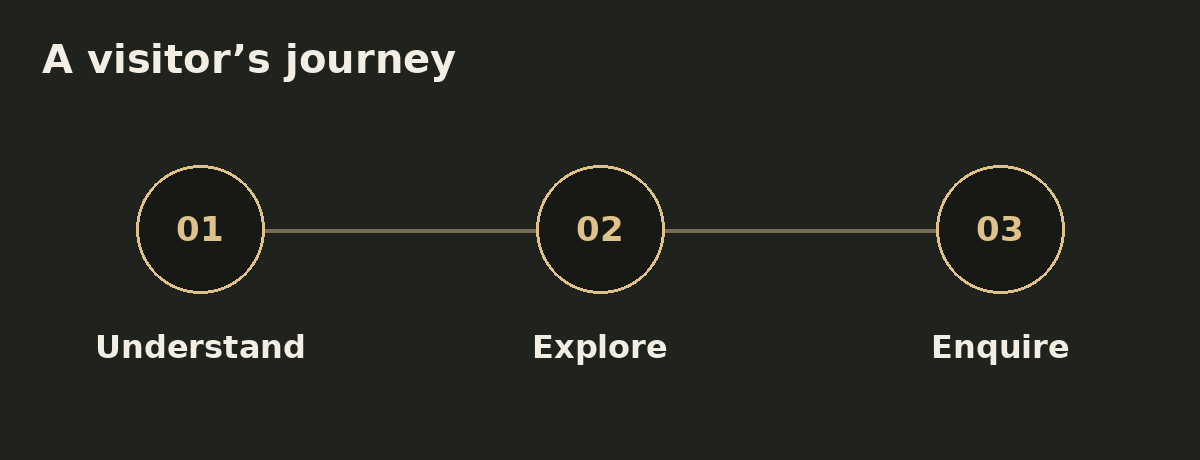
Before choosing a layout, identify who the page is for and what they need to understand. A service business may need clear service details, credible examples and a direct enquiry route. A personal brand may need a focused introduction and a useful collection of work. WordPress websites work best when those priorities guide the structure. The first conversation turns a broad request into a short list of page goals.
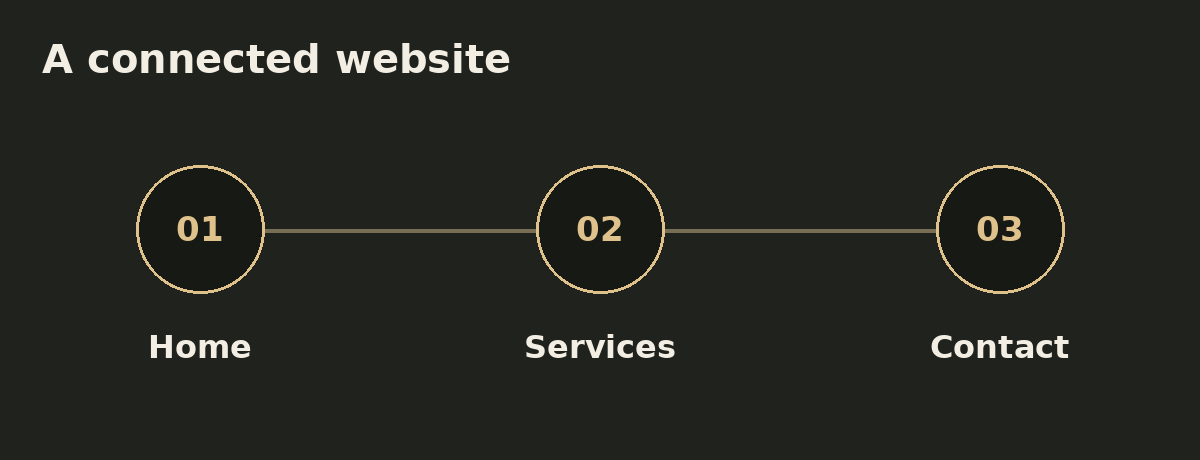
A homepage introduces the business. A services page explains the offer. A work page provides context for relevant projects, while a contact page removes uncertainty about the next step. Keeping those jobs clear makes the navigation easier to follow. For WordPress websites, the aim is a connected experience in which visitors can move from an initial question to the information that answers it.
The finished site needs to work beyond the first presentation. Responsive layouts, readable type, useful form labels and a manageable content structure all matter when real visitors arrive. I consider the way WordPress websites will be updated as well as how they look at launch. The appropriate setup depends on the pages, features and content the business actually needs.
A redesign does not have to replace everything. Sometimes the useful next step is a clearer service page, a faster asset, a better mobile layout or a simpler enquiry path. Existing WordPress websites can be reviewed against those specific problems. The scope should describe what will change, how it will be checked and what the owner will need after handover.
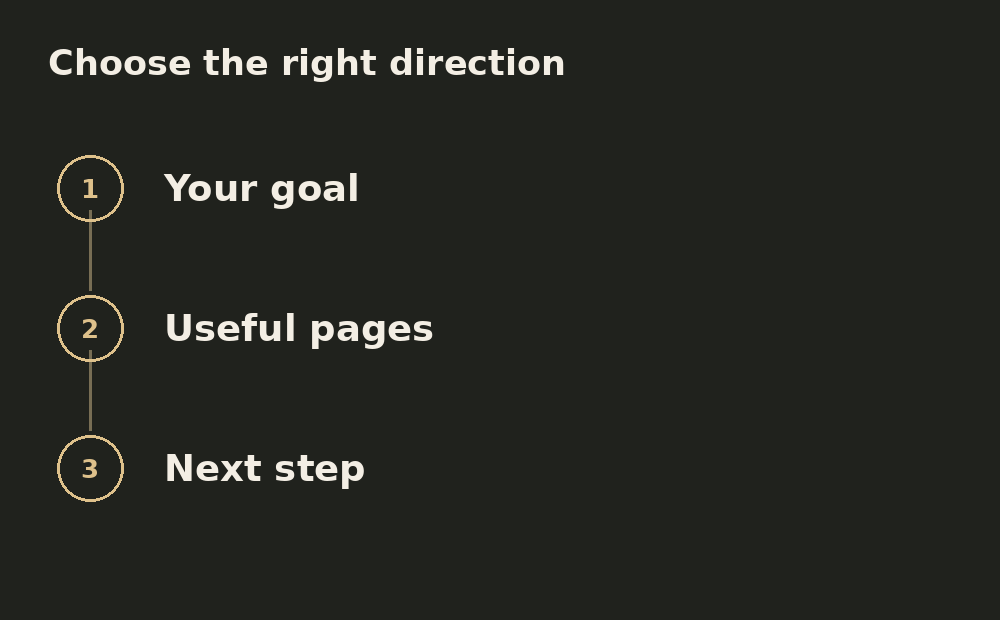
WordPress websites can suit service businesses, personal brands and projects that need manageable content alongside a clear visitor journey. The right choice depends on the pages, editing needs and functionality. Explain what the business needs to communicate before choosing the implementation.
Yes. Share the current URL and explain what is getting in the way. WordPress websites can often benefit from focused improvements before a complete rebuild is considered.
The business goal, audience, available content, important pages and required features. You can explore the services or the working process before sending a brief.
Further reading: WordPress Theme Handbook. Explore services, selected work or discuss your website.
Tell me what your business sells, where you operate and what you want the site to do better. A rebuild, project page, SEO improvement or full lead-generation setup can all start here.