01
UNDERSTANDSTART WITH THE REAL PROBLEM
Understand
Business, offer, market, audience, existing website and the actual conversion goal. The first job is to know what the site needs to communicate before deciding how it should look.
I do not start with random sections or a stack of features. I start by understanding the business, map the right structure, build the experience, then refine the parts that affect usability, speed, search and enquiries.
Business, offer, market, audience, existing website and the actual conversion goal. The first job is to know what the site needs to communicate before deciding how it should look.
Pages, sections, content hierarchy, search intent and calls to action are mapped before the interface gets crowded with detail.
Clean HTML, CSS and JavaScript or a practical WordPress implementation, with responsive behaviour considered from the beginning rather than added at the end.
Visual polish comes after structure: speed, mobile usability, accessibility, basic on-page SEO and the smaller interaction details are checked together.
New landing pages, content updates and lead-focused improvements can build on the same system instead of forcing another complete rebuild.
The work starts by narrowing the job of the website. That keeps design choices connected to business needs instead of adding sections simply because they look impressive.
Offer, project, service, location, proof or next action — the page needs a clear job.
Calls, WhatsApp, forms and focused CTAs belong where intent is strongest, not only at the bottom.
Reusable sections, maintainable WordPress structure and clear page hierarchy make future updates easier.
A site is not finished because the desktop screen looks right. The same structure needs to remain usable on tablet, mobile and small mobile, without overflow or broken hierarchy.
Discuss an existing site ↗Every page has a purpose, so content and interface decisions stay connected to that purpose.
The experience is built for real screens and real networks, not only for a desktop mockup.
Clean headings, page intent, internal links and on-page SEO foundations are part of the structure.
Here is the practical version of the questions that usually matter before a project starts.
Start with the business, audience, existing website and the main thing that needs to improve. From there the page structure and implementation direction can be mapped.
Yes. The work can focus on layout, responsive behaviour, page hierarchy, WordPress implementation, speed, basic on-page SEO and clearer lead paths.
No. The same process can be used for a project page, focused landing experience, or a set of improvements inside an existing site.
No. I focus on SEO-ready implementation and clear page structure. Rankings and lead volume depend on many factors beyond the website itself.
Understand, map, build, refine and grow. Each stage turns a broad request into a more specific decision, so the finished website stays connected to its business purpose.
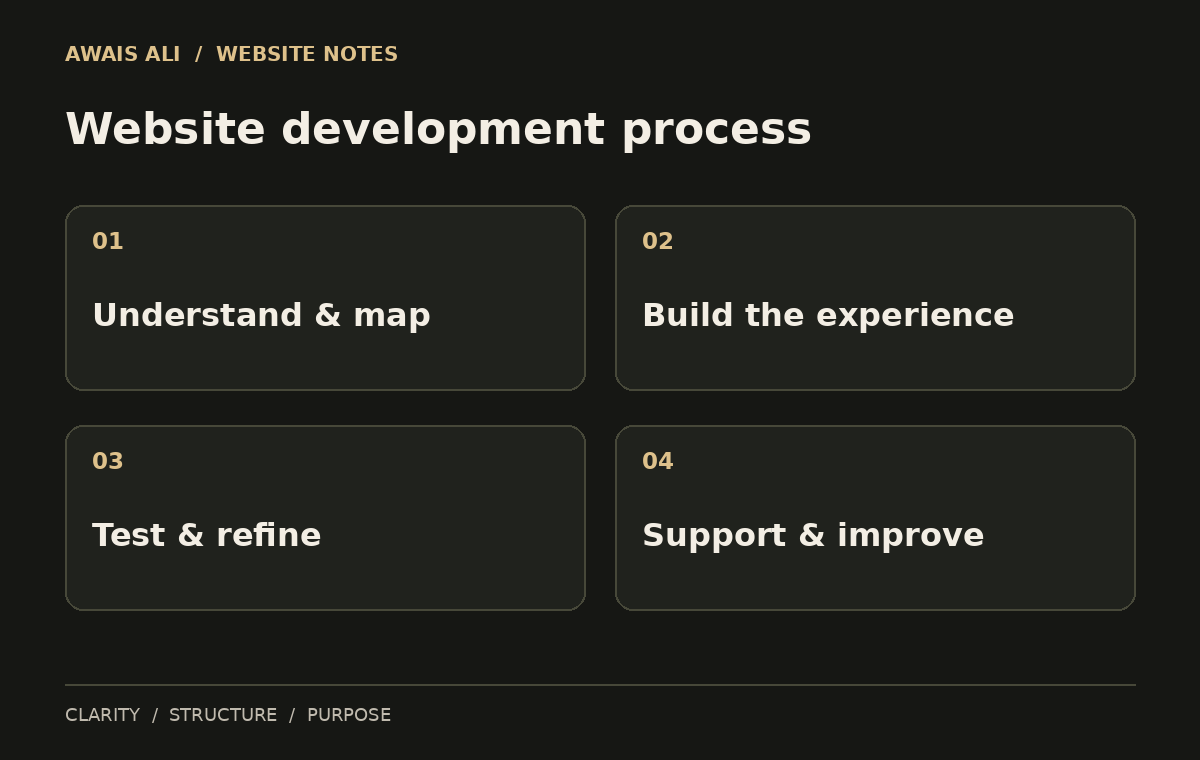
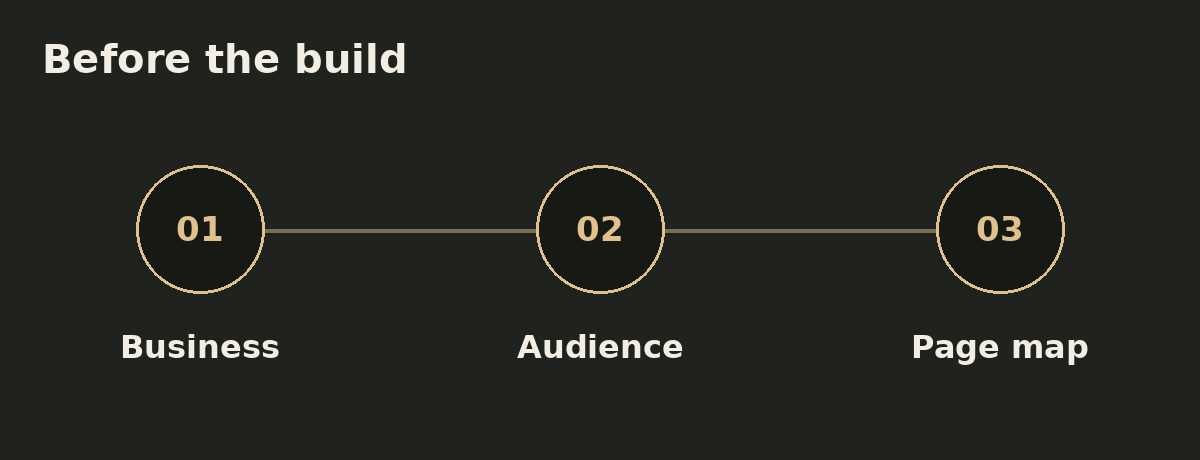
The website development process starts with the business and the visitor. Share what you offer, who the site needs to reach and the main problem the current experience creates. Existing content, brand assets and examples are useful context. This stage identifies the information that is ready, the gaps that need attention and the pages or features that belong in the proposed scope.
In the website development process, a page map gives the design a reason to exist. It connects the introduction, service details, work examples and enquiry path. Reviewing that structure early helps catch missing information before the build becomes more detailed. A clear content hierarchy also makes the mobile version easier to plan, because the most useful material already has an agreed order.
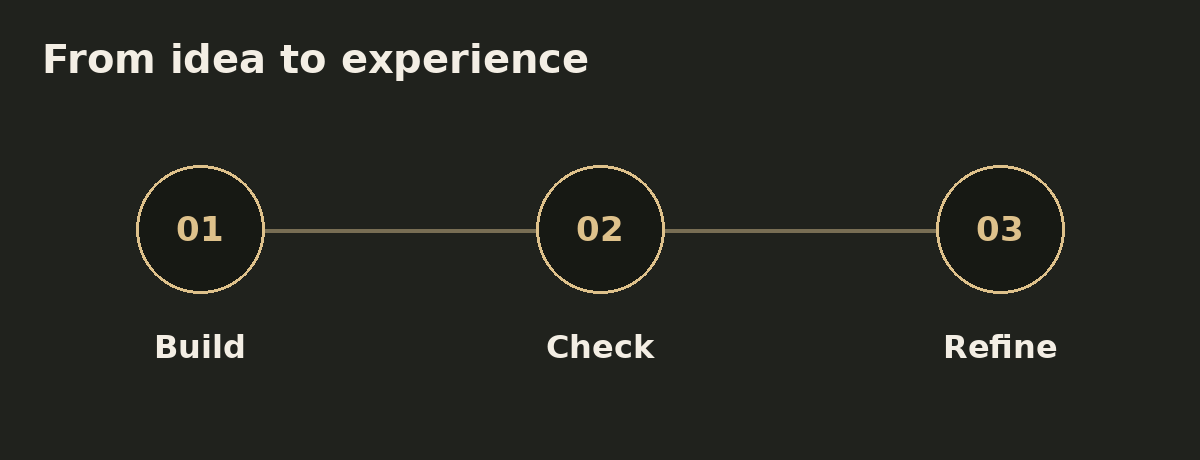
The website development process includes implementation and refinement across the agreed screens. The work considers heading wraps, navigation, form labels, card spacing and the way sections stack. Performance and on-page SEO foundations are reviewed alongside those visible details. A working page is checked as an experience a visitor can use, rather than judged from a single desktop screenshot.
The final part of the website development process is understanding what happens after the agreed build. Discuss content updates, feature changes and support needs while the scope is being defined. A small improvement can be planned separately when the site evolves. This keeps ongoing work connected to a specific need and helps the owner understand which responsibilities belong to the project and which require a new agreement.
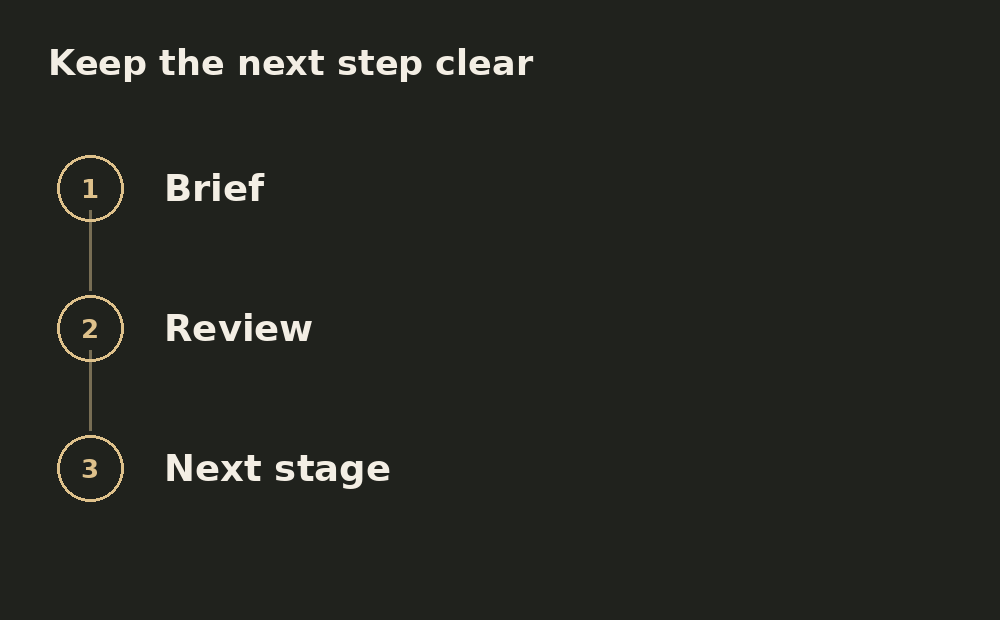
The website development process benefits from a clear brief, available content and specific feedback at review points. Identifying the person responsible for each decision helps avoid confusion about what is ready and what still needs attention.
Yes. An existing URL, a description of the issue and the intended visitor action can provide a useful starting point. The first review can identify whether a focused improvement or a larger rebuild makes sense.
They are agreed for the specific project after the requirements are understood. The website development process shown here explains the working stages; it does not set a fixed delivery date for every kind of build.
Further reading: WordPress Theme Handbook. Explore services, selected work or discuss your website.
New build, existing WordPress site or a focused improvement — the process starts with what the business actually needs.